
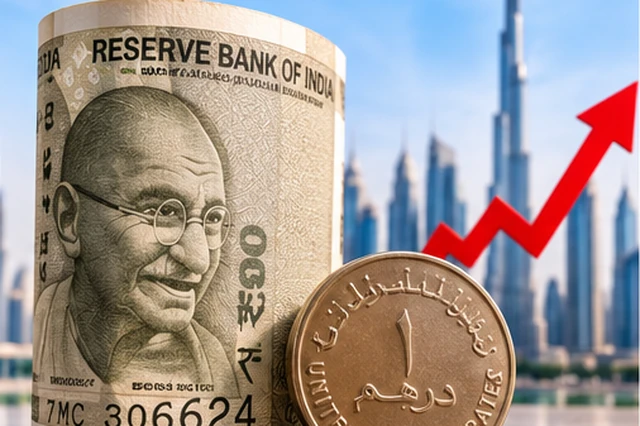
The Indian rupee was trading at about 25.67 to the UAE dirham on Monday morning, November 16, keeping remittance rates close to the levels expats in the UAE have seen through recent weeks. The Philippine peso and Pakistani rupee were also near multi-year lows against the dollar, and by extension the dirham, which is pegged to the US currency.
Gulf News reported the rate as of 8:30am on November 16, compared with 25.68 in the previous session. Indian brokerage Angel One used a similar rate of 25.66 rupees per dirham at 9:15am India time (7:45am UAE time) the same morning.
Today’s remittance rates at a glance
- Indian rupee: about 25.67 per dirham, as of 8:30am on November 16 (Gulf News)
- Indian rupee vs dollar: opened at 94.21 on Monday (Gulf News)
- Philippine peso: about 17.28 per dirham, unchanged from the previous close (Gulf News)
- Pakistani rupee: about 75.8 per dirham, unchanged (Gulf News)
At 25.67, an expat would need about Dh38.96 to send Rs1,000, Gulf News calculated. Put the other way, Dh1,000 converts to roughly Rs25,670 before fees. These are market reference rates; the rates offered by exchange houses, banks and apps differ and usually include a margin and transfer charges.
Why the rupee is under pressure
The US dollar has been gaining against most currencies after what Gulf News described as hawkish comments from Federal Reserve officials and a stronger-than-expected October inflation report in the US. Because the dirham is pegged to the dollar, a firmer dollar means the dirham also buys more rupees, pesos and Pakistani rupees.
For the rupee, rising US bond yields and swings in crude oil prices added pressure on Monday, Gulf News reported, while fresh inflows from foreign portfolio investors helped offset some of that weakness.
In the Philippines, a surprise slowdown in the economy has led to calls for the central bank to go easy on interest rate rises, Gulf News said. That has kept the peso weak against the dollar.
What it means for UAE residents
For the large Indian, Filipino and Pakistani communities in the UAE, the exchange rate directly affects how much families back home receive. A weaker home currency means each dirham sent goes further, though it can also signal higher import costs and inflation in the home country.
Rates move through the day, so the figure that applies to any transfer is the one quoted by the provider at the time of sending. Comparing the total amount received, after fees, across two or three providers gives a clearer picture than the headline rate alone.
For comparison, the rupee was trading near 25.7 per dirham a week earlier. Read our earlier rupee-dirham report.
This article is for information only and is not financial advice.